English
 日本語
日本語 한국어
한국어 français
 Deutsch
 Español
 русский
 português
 العربية
 हिंदी
हिंदी Indonesia
Selecting a laboratory autoclave should start with the materials being sterilized, the required cycle conditions, and the expected workload rather than chamber volume alone. Culture media, glassware, solid instruments, wrapped items, and laboratory waste behave differently during steam sterilization. The right equipment therefore needs to provide appropriate temperature control, air removal, exhaust, cooling, and loading flexibility for the intended application.
For laboratories with mixed workloads, the most practical approach is to identify the dominant load types, determine the largest routine batch, and then evaluate chamber configuration and cycle capability. This avoids choosing equipment that is either unnecessarily large or unable to handle the laboratory's most demanding routine loads.
The four most important selection factors are load type, workload frequency, load configuration, and sterilization cycle requirements. A laboratory processing culture media several times a day may require a different configuration from one primarily sterilizing glassware or solid instruments.
| Typical Laboratory Load | Primary Challenge | Important Cycle Consideration | Key Selection Factor |
|---|---|---|---|
| Culture media and other liquids | Heat transfer and controlled pressure release | Liquid cycle with controlled exhaust and cooling | Cycle control |
| Glassware | Steam circulation around containers | Effective air removal and drying | Loading arrangement |
| Metal instruments | Consistent steam exposure | Solid-load sterilization and drying | Cycle flexibility |
| Wrapped laboratory items | Air removal from packaging | Vacuum-assisted air removal and drying where required | Vacuum performance |
| Contaminated laboratory waste | Dense and irregular loading | Appropriate exposure and exhaust control | Load penetration and chamber capacity |
Load composition directly affects sterilization performance. Steam must contact the surfaces that require sterilization, so densely packed materials, containers with narrow openings, and wrapped items can require different processing conditions from open metal instruments.
For this reason, laboratory autoclaves should be evaluated according to their usable loading configuration rather than nominal chamber volume alone. Basket dimensions, tray spacing, chamber geometry, door clearance, and the way operators physically load the chamber can all affect practical throughput.
A 100-liter chamber, for example, does not necessarily provide 100 liters of efficient working capacity. Part of the chamber may need to remain available for steam circulation, while the dimensions of individual containers or baskets may prevent the theoretical volume from being fully utilized.
Capacity should be calculated around the largest routine workload and the laboratory's peak processing period. If a facility normally performs several small cycles but occasionally needs to sterilize a large batch of glassware or media, the occasional load should be considered when determining chamber size.
Operators should record the number of loads processed per day, the approximate occupied volume of each load, the largest routine load, and the desired turnaround time. These figures provide a more useful basis for selecting chamber capacity than simply matching the autoclave to the laboratory's average daily load.
Another important consideration is basket utilization. Two autoclaves with identical chamber volumes may have different practical capacities because their internal basket dimensions and usable loading heights differ. Buyers should therefore request actual chamber and basket dimensions before finalizing equipment specifications.
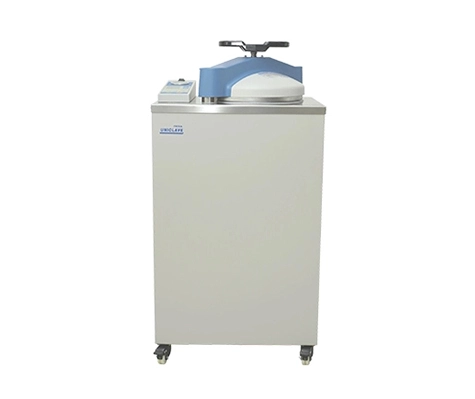
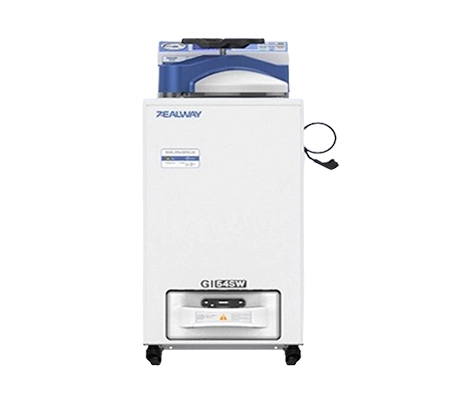
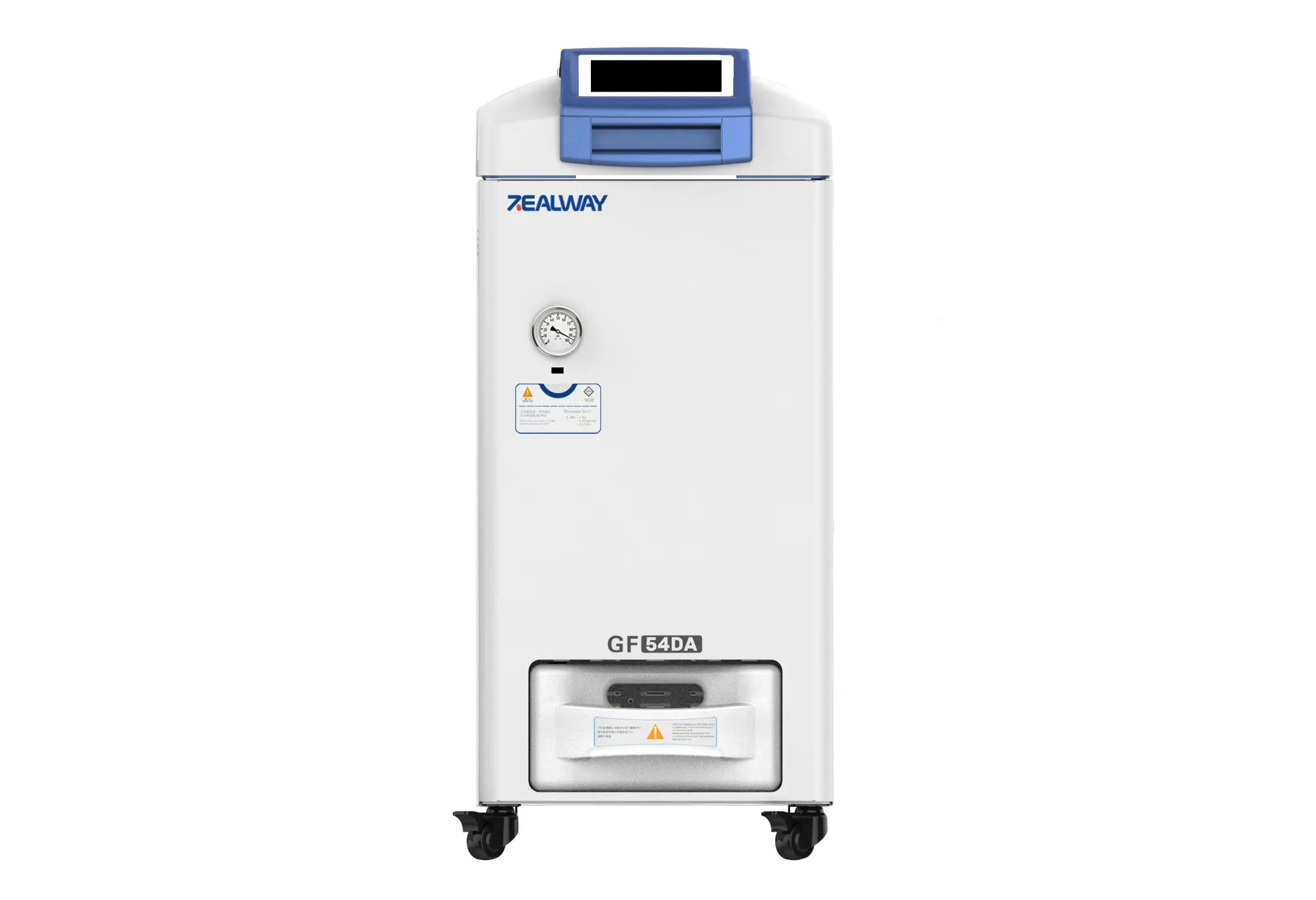
A vertical configuration can be practical when a laboratory requires more capacity than a compact benchtop sterilizer but has limited floor space. The vertical arrangement makes efficient use of the available footprint while allowing the chamber to accommodate routine laboratory loads such as glassware, media containers, instruments, and other compatible materials.
A vertical autoclave can be particularly useful when the facility needs flexible loading capacity without installing a large horizontal system. However, chamber size should still be matched to the weight and dimensions of the loads that operators will handle regularly.
Loading ergonomics should not be overlooked. As chamber capacity increases, the weight of loaded baskets and the depth of the chamber can become important operational factors. Equipment selection should therefore consider not only sterilization performance but also how easily operators can load and remove materials throughout a normal working day.
Not necessarily. A laboratory may process liquids, glassware, instruments, wrapped items, and waste during the same working week, but these materials do not necessarily benefit from the same cycle configuration. Combining incompatible load types can increase cycle duration and make process control more difficult.
A lab autoclave with multiple selectable programs can therefore provide greater practical value than simply choosing a larger chamber with limited cycle flexibility. The objective is to match each load category with an appropriate sterilization program rather than maximizing the number of materials placed in one cycle.
Liquids require particular attention because the relationship between chamber pressure, liquid temperature, and exhaust rate can affect the stability of the load. Rapid pressure reduction can cause boiling, splashing, or container damage, especially when large liquid volumes are processed.
Solid instruments and glassware have different heat-transfer characteristics. Once the load reaches the required sterilization conditions, the main concern is maintaining adequate exposure and, where applicable, removing residual moisture during the drying stage.
Consequently, a laboratory should not compare cycles solely by temperature. Exposure time, air removal, exhaust strategy, cooling behavior, and drying capability all contribute to the suitability of a cycle for a particular material.
Load density is one of the most overlooked variables in routine autoclave operation. A chamber that is correctly sized can still perform inconsistently if materials are tightly compressed or containers are positioned in a way that restricts steam movement.
Glassware should be arranged to permit steam circulation, while packaged materials should not be stacked in a manner that prevents effective air removal. Dense laboratory waste may require particular attention because the center of the load can heat more slowly than exposed surfaces.
This is why the manufacturer's loading recommendations should be treated as part of the sterilization process rather than merely as operating instructions.
Cycle flexibility is important when one sterilizer serves several laboratory applications. Buyers should examine available programs for different load categories and determine whether the equipment provides appropriate control of sterilization temperature, exposure time, air removal, exhaust, cooling, and drying.
Data recording can also be important in professional laboratory environments. The ability to review cycle parameters and identify alarms or deviations makes routine process monitoring more manageable and can support internal quality procedures.
Where the laboratory operates under specific regulatory, research, pharmaceutical, or institutional requirements, the sterilizer should be evaluated against the applicable procedures before purchase rather than assuming that every laboratory autoclave provides equivalent cycle capabilities.
Chamber volume and cycle flexibility solve different operational problems. A larger chamber reduces the number of batches required when the laboratory routinely handles large loads, while flexible programs allow the same equipment to process different material categories appropriately.
For a mixed workload, a moderately sized chamber with suitable programs may be more practical than a substantially larger unit that cannot efficiently accommodate the laboratory's different load types. Conversely, a high-throughput laboratory may benefit from greater capacity if the dominant workload is consistent and predictable.
Before selecting a model, laboratories should document their common load types, maximum routine load, daily cycle frequency, container dimensions, packaging methods, available installation space, and required cycle functions. Chamber dimensions and basket sizes should then be compared against those actual loads.
It is also advisable to review water requirements, drainage, electrical specifications, safety features, maintenance access, cycle documentation, and operator controls. These details can have a substantial effect on long-term usability even when two machines have similar sterilization temperatures and chamber volumes.
The most effective laboratory autoclave is therefore not simply the largest or fastest available model. It is the system that provides the appropriate combination of usable capacity, cycle control, load compatibility, operator ergonomics, and repeatable sterilization performance for the laboratory's actual workload. By selecting equipment around real load conditions rather than nominal specifications alone, laboratories can improve throughput while reducing unnecessary cycles and operational compromises.